


CERVEXO
As part of an academic project, I created the brand strategy and visual identity for Cervexo, a conceptual cervical spine exoskeleton designed to reduce neck strain for surgeons.
Through consultation with a human-factors SME, I ideated and 3D-rendered an industrial product prototype and presented it in a conceptual trade show booth.


Brand System Development
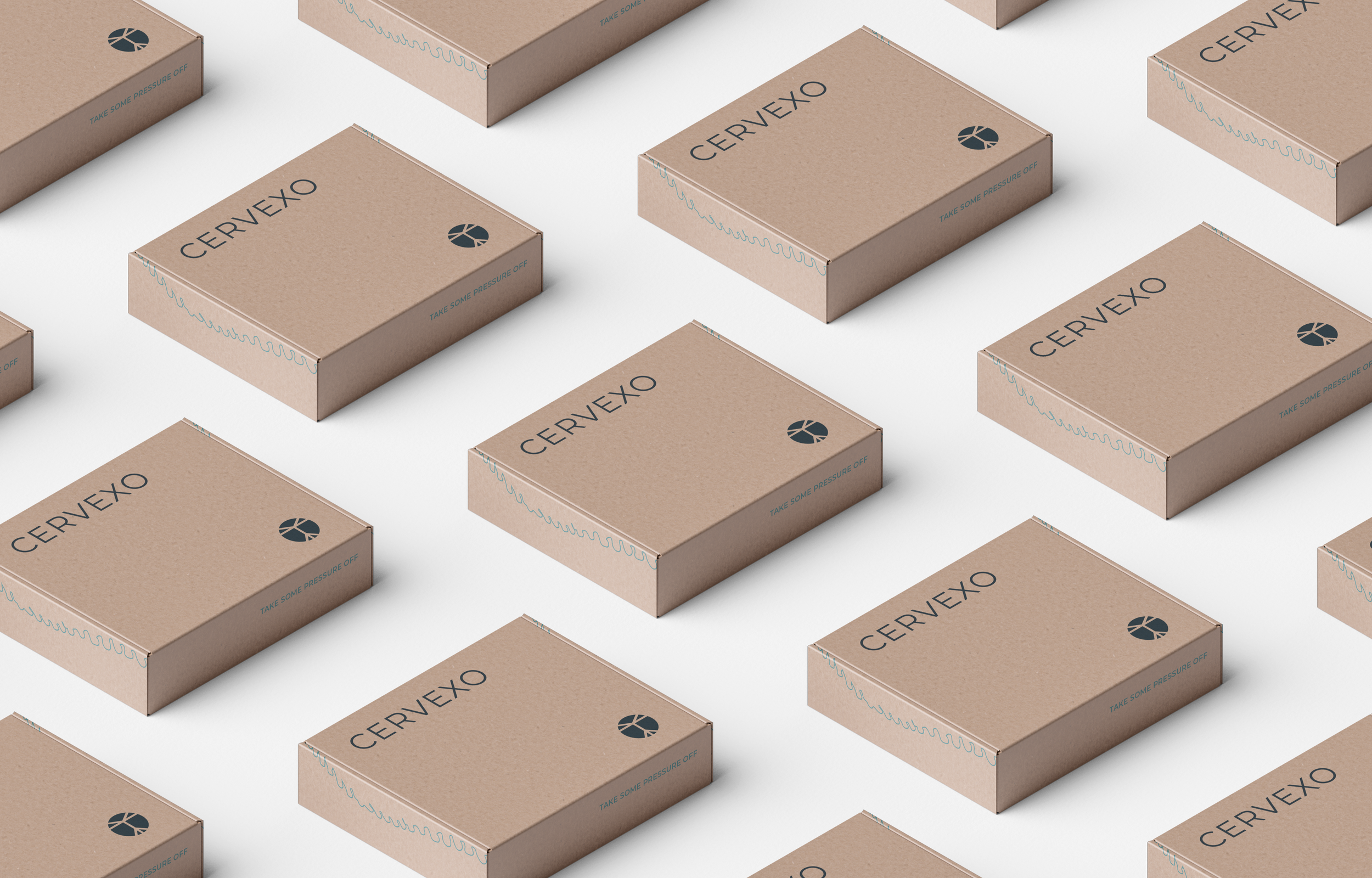
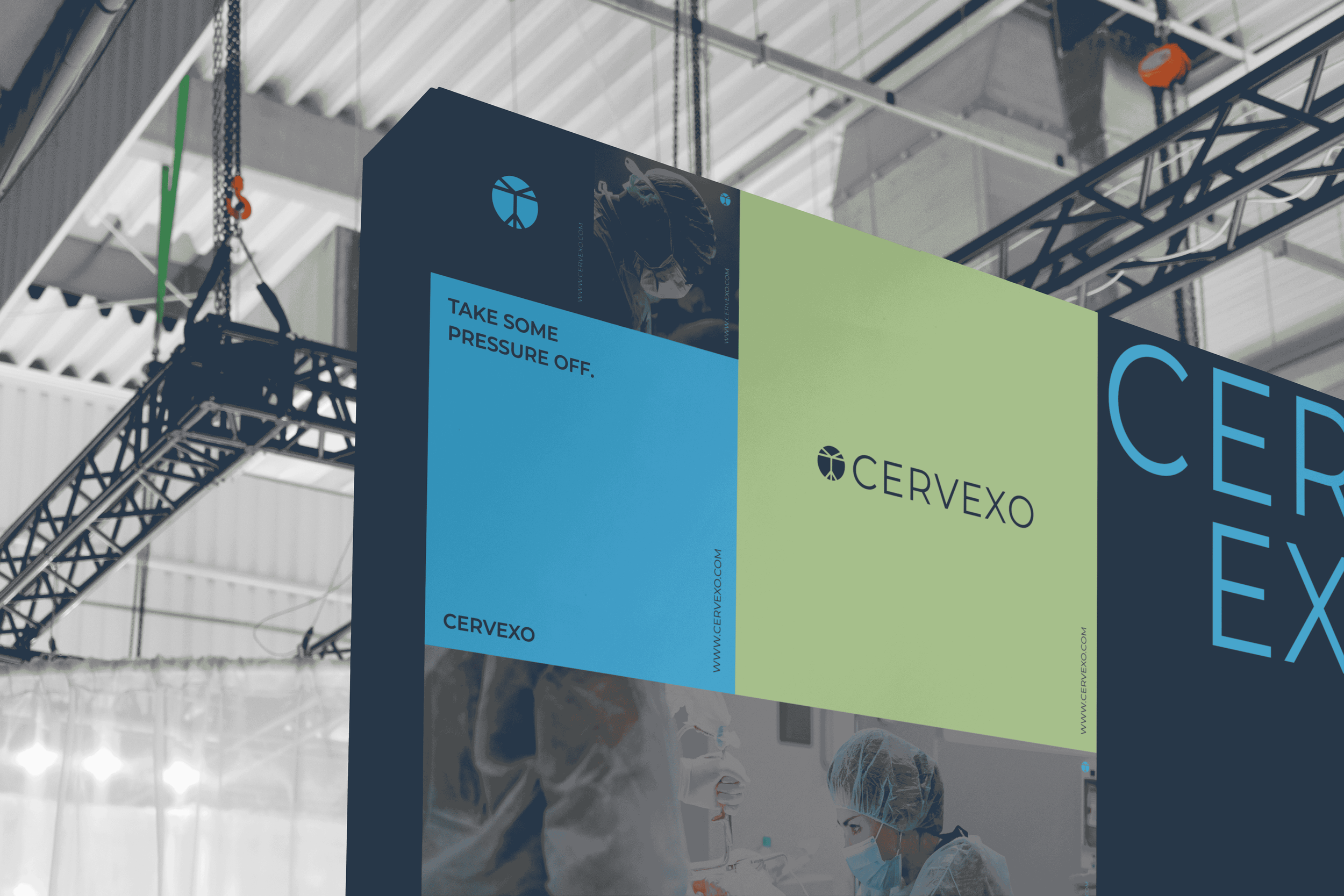
The visual identity system translates the physical experience of the exoskeleton (support, precision, and relief) into a cohesive brand language. Color, typography, and iconography were strategically developed to communicate medical credibility while reinforcing innovation and human-centered design.



Product Concept & 3D Visualization
The conceptual cervical spine exoskeleton is engineered to reduce neck strain during prolonged surgical procedures. The product focuses on weight distribution, range of motion, and unobtrusive integration with pre-existing surgical attire.
The final design balances structural reinforcement with streamlined minimalism, supporting adaptability amongst users. Iterative feedback from a human factors subject matter expert informed refinements along the way.

Sketches for head rest, materials, and joint mechanism.

Sketches for vertebrae units.

Sketches for shoulder/chest piece.

Sketches for shoulder straps.

Sketches for product on a model.
Trade Show Booth Experience Design
Material & Visual Language Integration
By incorporating natural, organic materials and soft architectural forms, the space balances the clinical precision of the device with warmth and approachability. The booth’s material palette, lighting, and spatial layout extended the established brand system, ensuring cohesion between visual identity, product innovation, and environmental design.
Experiential Strategy: Relaxation as Proof of Concept
Through developing an experience centered on surgeon fatigue and recovery, the space integrates caffeine stations and massage chairs to simulate moments of physical relief. These touchpoints reinforce the product’s core value of reducing physical strain to drive traffic and increase dwell time in the booth.


